
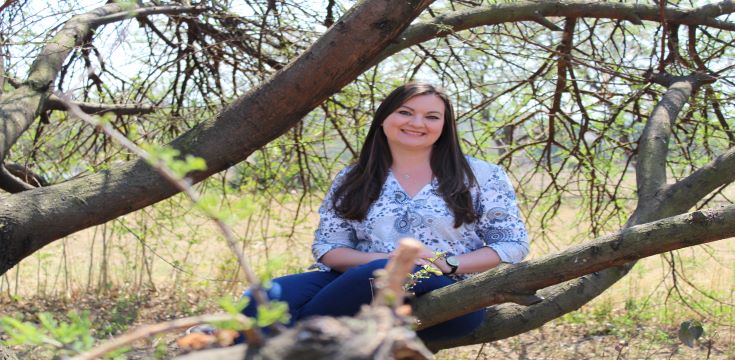
#WIB – Q&A With Carmen Jordaan Owner Of Whole Earth Recycling
1. Can you please tell us more about your business?
Whole Earth Recycling specialises in the weekly collection of dry recyclables such as paper, plastic, glass, cans, cartons such as long life milk, and electronic waste (anything with a plug) from houses, offices and schools in Johannesburg. We provide our clients with blue recycling refuse bags and all of their recyclables can be placed into the same blue bag as we support a community project consisting of up to 35 sorters, who sort and sell the recyclables in order to generate an income for themselves.
The Whole Earth Recycling warehouse provides shelter for the sorters against the elements (rain, wind, sun etc.), and ensures that the recyclables do not end up littering the surrounding environment; traditionally Reclaimers sort recyclables in the open veld and some of the recyclables are blown into the veld and washed into nearby rivers. The sorters also have access to toilets, showers, and a tea area in the Whole Earth Recycling warehouse, and the buy-back-centres collect the recyclables directly from the warehouse so that the sorters don’t have to pull their recyclables in bulk bags along busy roads to buy-back-centres to sell the recyclables.
This is the only source of income for the sorters and without it they would be rummaging through Municipal refuse bins (in most cases mixed with expired food, nappies, medical waste and other non-sanitary items) to gather recyclables to sell. By recycling with Whole Earth Recycling, you are contributing towards job creation (a total of around 50 people), through the Whole Earth Recycling drivers, truck assistants (loaders), and admin team and through the sorters that make up the community-based project, while reducing the impact that we are having on our environment. Every little bit helps.
As an extension to this service, my husband Danie and I opened Whole Earth Organic Farm so that we could also provide a weekly food waste collection service. Our clients place all of their food waste into a scented bin liner inside a 32L food waste bin and place their liner outside for collection every week. Our team collect the liner filled with food waste on a weekly basis and leave a replacement bin liner in its place. In the last week of every month, we provide our clients with a 2kg bag of compost to use in their garden, vegetable patch or pot plants.
At Whole Earth Organic Farm, we receive garden waste from our clients, which we shred and then mix with the food waste before placing it into windrows. The compost windrows are turned and eventually (usually 3 or 4 months down the line) we sieve the compost so that it can be sold. We also have an earthworm farm, and are working towards an organic vegetable and fruit (including nut) tree garden, as well as a Vachellia karroo forest to support the local bushbaby population – they eat the gum that these trees produce.
2. When, how and why did you start your business?
The owner of the recycling company that I used to work for passed away at the beginning of 2014 and the new owner was not interested in curbside recycling collections (interestingly, I grew the very first curbside recycling collections in South Africa – in Lonehill, Johannesburg, under the wing of my boss who passed away in 2014. I managed to grow their collections from 600kg a month to well over 120tons of recyclables every month straight out of university).
I registered Kabusha Green (Pty) Ltd at the end of 2014 and shortly afterwards I was approached by Whole Earth Recycling, who were making a massive loss and were about to close their company. With all of the employees from the 2 companies being at risk of losing their jobs, I took a leap of faith to help them all and launched my own curbside recycling collection in January 2015.
It wasn’t easy as I didn’t have much money and Danie (my then boyfriend and now husband) and I spent many a Friday evening driving the temperamental, beaten-up old Daihatsu (all that I could afford at the time) an hour and a half to the only mechanic in Johannesburg who would work on it (Daihatsu had left the country). We would then fetch it at 3am on Monday morning to make sure that it was ready for collections by the time that our team arrived for work in the morning.
This was only one of many hurdles that we had to overcome, but thankfully we had a growing group of individuals (our clients) that believed in us. In week one, each driver would drive one day a week, and this became 2 days each and then 3 days each and so on. Today we have a fleet of 5 collection vehicles (and well as our trusty old trailer – all that’s left of our original fleet consisting of the Daihatsu and a Kia that wasn’t much better off) and a team to compliment them. Some of our drivers started as sorters and then became assistants (loaders) and we sent them for driving lessons so that they could become drivers in time.
3. What is your role in the business?
As an entrepreneur of a small company, I get involved in most aspects of the business – I even help the sorters from time to time. However, I predominantly work on growing the business, while making sure that our existing clients are receiving the best possible service.
4. Where did you study and what did you study?
I studied a BSc Natural and Environmental Sciences with endorsement Geography and Environmental Management as well as a BSc Honours with field of study Geography at the University of Johannesburg.
5. How did you finance your business?
This was a massive barrier to entry because no bank was interested in loaning us money without 3 months bank statements, which of course we did not have. We couldn’t even get a cell phone contract to begin with – we had to use a prepaid service. I had saved up some money over the years, while working, and I used this to get started but I had to get enough clients to cover our monthly expenses within the first 3 months to make it work. I also took on the debt of the original company, which was quite nerve wrecking.
6. Describe your average workday, if such a thing exists.
After our home morning routine (we have 2 young children) I head to the office/warehouse where we prepare for our collections and sorting– we try to prepare as much as possible the day before. We have an incredible team, so each team leader/Manager makes sure that everything is good to go on their side. Once the trucks have been offloaded and have left for the day, the sorters begin sorting the recyclables that are now in the warehouse.
Between myself and my admin team, we answer our emails (new potential clients and existing client queries), answer the phones, liaise with and support the collection and sorting teams, capture data for reports and all other admin related tasks. I also do site and client visits (including popping into Whole Earth Organic Farm), proposals, conduct research on the markets, make payments, work on business and marketing strategies, and the list goes on.
7. How do you balance your home life and your work life?
I’m still working on this. Danie and I work closely together so we tend to discuss work a lot when we are at home, which can be beneficial but it’s important to draw a line. We make a massive effort to spend quality time with our 2 little ones over the weekends as we often leave early for work and get home late.
Sometimes this quality time involves going to Whole Earth Organic Farm, but we make it fun and teach them as we do things e.g., how to pick lemons, feed the earthworms and the chickens, how to shred garden refuse (they love riding on the tractor) and now that it’s raining we have been able to take them to see the local Giant Bullfrog population – they learn a lot about ecology on a daily basis.
8. What drives you and inspires you?
My passion for people and the environment. I want our children to have an amazing future and I see myself and our company as being part of the solution to many social and environmental crises I’m hoping that our children will follow in our footsteps and create a better future for themselves and their children.
9. Where and when do you have your best ideas?
Often when I am holiday and I have “switched off”. I also tend to have good ideas when I am talking to like minded people sharing their experiences with me. I love listening to what people have to say – from their past, to their present and also their future aspirations.
10. Where and how do you market/advertise your business for sales leads?
More than 90% of our new business comes from word of mouth – I think that this is great because it means that we offer an excellent service 😊 We have advertised on social media platforms (mainly Facebook and Instagram) and in media such as newspapers, magazines, and on radio.
11. What is next for your business?
We would like to continue growing so that we can impact more lives and divert more waste from landfill. We would also like to conduct education and awareness campaigns (particularly for the youth). Ultimately, we would love to see our company open branches in many suburbs and provinces so that we can incorporate the local Reclaimers from each area so that they don’t have to dig through unhygienic bins along the streets.
12. What advice would you give to female entrepreneurs hoping to start their own business?
If possible, do something that you are very passionate about. Starting your own business is tough and I feel that it’s only with passion and determination that you can overcome some of the adversities that will come your way. Also, make sure that you make hay while the sun shines – save during these times so that you are prepared for any dark days.
For example, don’t buy a new car every 2 years just because your business is doing well. Rather buy a new car every 5 or more years (my car is nearly 14 years old) and put any extra money that you make back into the business, whether in the form of assets or savings. I would also advise to get rid of debt as soon as possible – try to pay off any debt that you might incur as soon as possible as the interest that you pay every month could rather be used to grow your business.
Short bio
An eco-warrior of note, Carmen Jordaan is the passionate owner of Whole Earth Recycling, which sorts more than 120 tons of recyclable material a month, and provides a simple, reliable, and hassle-free way to recycle. Inspired by her parents, and the desire to save the world, Carmen studied a BSC in Environmental Management at the University of Johannesburg, completing her Honours Degree at the age of 21. Carmen, and her husband Danie, recently launched Whole Earth Organic Farm, which offers organic kitchen waste (food waste) collection and composting to residences and offices around northern Johannesburg.
Contact information
Tel: 011 791 4537
Email: info@wholeearth.co.za
Website: www.wholeearth.co.za
Social media links
Whole Earth Recycling Facebook Page:
Whole Earth Recycling | Johannesburg | Facebook
Whole Earth Organic Farm Facebook Page:
Whole Earth Organic Farm | Facebook
Whole Earth Recycling Instagram Handle:
Whole Earth Recycling ♻️ (@wholeearthrecycling) • Instagram photos and videos
Whole Earth Organic Farm Instagram Handle:
Whole Earth Organic Farm (@wholeearthorganicfarm) • Instagram photos and videos