
Why Thread Lifts Are Increasingly Popular
Until recent years, the only way to fix signs of ageing such as drooping cheeks and eyelids or sagging jowls and chin was with facelift surgery.
However, a procedure is available that offers a non-invasive way to rejuvenate your face without going under the scalpel – the thread lift – and it is easy to see why it is fast gaining in popularity!
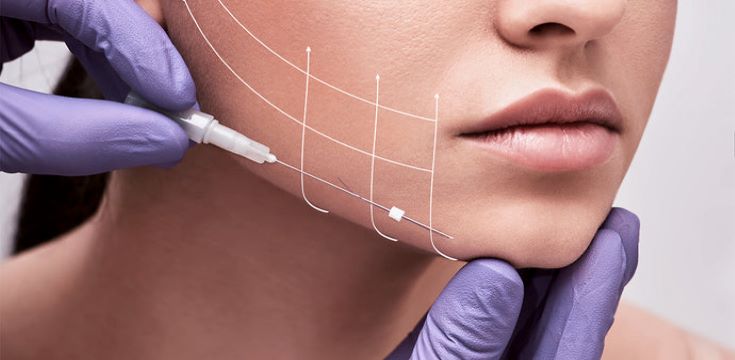
Dr. Bruce Lelala, a leading plastic surgeon from The Specialist Laser and Cosmetic Institute (SCIN), explains that a thread lift is a procedure where thin, dissolvable sutures are threaded underneath your skin and then pulled tight – lifting the skin and making it taut. Invisible, painless “barbs” grab onto your skin and make sure that the thread grips your underlying tissue and muscles as the thread is pulled tight. They are great for areas such as jowls and jawline, brow line, under-eye area, the forehead, and cheeks.
In addition to lifting the skin, a thread lift also combats ageing by provoking the body’s healing response and causing the body to send collagen to the treated areas. “Once a barbed thread is inserted, your body’s healing response is triggered and even though you’re not injured by the threads under your skin, your body detects the suture material and stimulates collagen production in the affected area,” says Dr. Lelala.
Collagen helps to keep our skin strong, thick, and supple. As we get older, our bodies gradually produce less and less collagen, which leads to a reduction in skin thickness. As the skin grows thinner and weaker, it’s no longer able to support the tissues beneath it, meaning that gravity pulls it downwards and stretches it. Infusing the skin of the face with fresh collagen when the signs of skin slackness are still mild can help to reduce looseness (by thickening and hydrating the skin) and strengthen the skin.
According to Dr. Lelala, patients who have a thread lift will notice a gradual improvement in their skin’s tone and firmness as the collagen builds up. “While their threads are in place, the body’s healing response will be constantly activated because the body will want to heal the sutured areas and expel the sutures. The body is programmed to react this way when it senses any foreign object. Fortunately, because the threads placed under the skin during a thread lift are so small, the patient will not feel any of this happening.”
The advantages of having a thread lift versus a facelift
“Results are instant after the threads are put into place, and you will also notice increased improvement in the days and weeks right after they are inserted, as swelling subsides and collagen develops.”
“For many patients, the biggest advantage of having a thread lift, rather than a facelift, is the recovery time. When a patient has facelift surgery, they must go under general anaesthetic and usually need to take one to two weeks off work in order to heal. Recovery from a thread lift, on the other hand, is easy. Thread lifts can be performed under local, rather than general anaesthesia, meaning that thread lift patients can drive themselves home and look after themselves immediately after having their procedure.
While some patients will experience a little bit of soreness, redness, and swelling after having a thread lift and therefore wish to take the rest of the day off, most can return to work immediately. This procedure is therefore ideal for people who have children at home or those who have busy, demanding careers.”
“Thread lifts are also low risk and there is virtually no risk of scarring, severe bruising, bleeding, or other complications after having a thread lift. Finally, and also importantly, because thread lifts are much easier to perform than facelift surgery, they are much more affordable,” advises Dr. Lelala, who explains that the results achieved from a thread lift will last about three years after which patients can opt to have fresh sutures placed.
“At SCIN we use Silhouette Soft which relies on the use of biocompatible temporary sutures to lift the face. The Silhouette Soft threads contain a number of sutures interspersed with tiny “cones” made of Lactide/Glycolide that are adept at grabbing tissue. This allows the threads to gather more skin, producing a more noticeable lift to the cheeks and jowls.”
“Having a Silhouette lift takes about 45 minutes on average and can be performed under local anaesthesia. A specially designed thin needle is used to insert the threads into the skin, minimizing patient discomfort.”
Dr. Lelala concludes by advising that thread lifts create a more subtle and natural-looking end result than facelift surgery and are best suited to people who are dealing with mild to moderate, rather than severe, signs of skin sagging and ageing. “However, for older patients who cannot undergo facelift surgery for medical reasons, thread lift provides a wonderful alternative!”
For more information visit: www.scinmed.com