
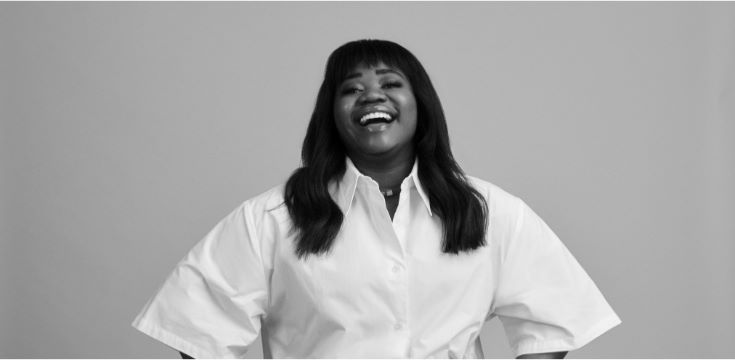
#WIB – Q&A With Vimbai Masiyiwa Co-Founder Of Batoka Lodges
1. Can you please tell us more about your business?
Batoka Lodges is a social enterprise in the tourism and hospitality industries. By bringing together sustainable luxury tourism and community empowerment we aim to fulfill a niche in the African travel market.
2. When, how and why did you start your business?
We decided to start this business just before the pandemic. Obviously the global shutdown slowed the process of going to market but we’re excited to finally open the doors to Batoka Zambezi Sands in the next month. Opening up the lodges was prompted by a desire to use hospitality and tourism as a catalyst for social change and local economic growth. The process of opening the business was evolutionary in that I came in at a board-level initially in the original lodge business about 5 years ago, and later I proposed and executed the move to creating a new, sustainably driven iteration of the lodges in 2020.
3. What is your role in the business?
On paper, I am the CEO of Batoka. However, as with many small businesses, there is never one role for an individual. I am also very particular about how I want our teams to deliver on service. In this industry, attention to detail and service excellence is everything, so it means sometimes I am embedding myself in the reservations team, or with guest experience, marketing etc. Let’s put it this way, I am CEO 24/7, but sometimes I double as a reservations agent or accountant … depending on the day and the needs in the team.
4. Where did you study and what did you study?
I obtained my BSc in Computer Information Systems at Bryant University, and completed my Master’s in Entrepreneurship and Entrepreneurship studies from University College London.
5. How did you finance your business?
Too personal I think.
6. Describe your average workday, if such a thing exists.
I have other roles and responsibilities beyond Batoka Hospitality, so I usually have to make time for all of those in a day. I recently started training to run the Victoria Falls half marathon so at the moment, my day begins with a run. While I run, I tend to think through my day and mentally prioritize everything that needs to get done. When I get home, I will write down the list I made in my head, have coffee and get ready for the day.
My work day then starts around 9.30 alongside breakfast or so, I always go through emails first. Then I will do a solid 3 hours on strategy, business development, etc. After that I take a break, probably 2.5 hours to do something outside of work. I am very aware of the fact that I tend to be unproductive between 3-6pm so I try my best not to schedule work then as I know I am not putting in 100% of myself during those hours and the quality of what I would produce is not up to standard.
During this time, I may take meetings, particularly for projects outside of Batoka, I may go for coffee with a friend, walk my dog or just hang out. I call it balance. Then in the evening before dinner, I can do another 2.5/3 hours of work before calling it a day. This is how my days are looking at the moment, because I am not traveling, but it changes all the time.
7. How do you balance your home life and your work life?
Mental health is deeply important to me and having experienced my own challenges, I have now come to see balance as having healthy boundaries and non-negotiables while leaving room for life to happen. So, that means knowing when it’s time to take a break, prioritizing workouts and spending time with my loved ones.
I also just believe that everything happens in God’s time, and that what is meant for you will find you, therefore, I am not under pressure to ‘seize’ every opportunity or moment. I don’t think I have balance at all. This year I struggled to take time off work to enjoy life, and I regret that. It’s a lesson learnt for the coming year, make time to have fun because we really only get one life.
8. What drives you and inspires you?
I think by nature I can’t do nothing with my life and time, I always want to be productive and impactful. With that said, I am driven by the need to be transformative, the need to find solutions where I see challenges, to be innovative and creative. I have a habit of listening to people and coming up with unsolicited ideas and solutions just because.
I think because in life I am driven to find solutions and just be a catalyst for change. In terms of what inspires me, I am inspired by the beauty of the African continent. And this is not just referring to the landscape, but extends to the cultures, traditions and our people. I believe what we value as Africans, what we know, how we live needs to be shared with others.
9. Where and when do you have your best ideas?
Any time I am driving or just before bed. I love long car rides, so I will get into the car and put on an audio book or a podcast; and while I listen, I tend to expand on what I am hearing and think of ways it can apply to my world and my business. That’s usually where my ideas stem from. I have always been a dreamer, I love to push my mind to dream about what I can achieve, what the business can achieve and what the African continent can look like, then when I am sitting at my desk and I have time between meetings, I start to put step-by-step plans together.
Obviously there are some ideas that when I sit down to put a plan together, I just realised they’re probably better as ideas and dreams. Then there are others that I will happily work on for months before I find a window of opportunity to execute on them.
10. Where and how do you market/advertise your business for sales leads?
We use a mix of digital marketing, PR and traditional peer-to-peer marketing in the industry. We believe a pull strategy has long-term longevity and will ultimately create brand advocates that will generate leads several times over.
11. What is next for your business?
We’ll be expanding to new locations and growing our footprint in Africa, while also partnering with even more African businesses. My goal is for the world to see Africa’s true value and beauty, so in business when I think about what is next, I am thinking about how best we position ourselves to reach this goal.
12. What advice would you give to female entrepreneurs hoping to start their own business?
Firstly, don’t be afraid to dream. Second, don’t doubt yourself, everyone else is trying to do that, and there is nothing more powerful than believing in yourself. And lastly, Knowledge is power – listen to those who have succeeded or those who are further along in their journey, don’t be afraid to ask questions and be comfortable with failing at times.
ABOUT Vimbai Masiyiwa
Vimbai Masiyiwa, is a 28-year-old businesswoman and the Executive Director of Batoka Hospitality limited, a purpose-driven hospitality company and the first black female-owned Safari Lodge group in Africa.
In her role as co-founder and CEO, she has led the strategic repositioning of the Batoka Hospitality Group for investments in Zimbabwe and the expansion in Sub-Saharan Africa. Vimbai aims at using tourism and hospitality to build sustainable livelihoods by improving the lives of the local people. She is working towards the development of the African tourism industry as a whole, changing the narrative around Africa. In addition to preserving and strengthening communities, she is also committed to preventing the extinction of wildlife and preserving their environment.
Having spent most of her childhood in South Africa, Vimbai strives to empower the African dream of success through eco-tourism and hospitality, particularly through the Tesse Fund. By contributing 10% of revenue from guest stays to the fund, Batoka Hospitality employees can recommend projects that benefit their local communities.
Learning is at the heart of Batoka Hospitality’s ecotourism work in Zimbabwe, which includes building schools and libraries, as well as providing training and skills development to Batoka staff and the surrounding community.
Vimbai is also a mental health activist. She currently serves as an advisor for serval Africa-based organisations that aim to destigmatize mental health amongst young people, particularly in rural areas.
Vimbai graduated with a BSc in Computer Information Systems from Bryant University and a MSC in Entrepreneurship and Entrepreneurship sciences from University College London. She is currently based between London and Johannesburg. She is the second eldest daughter of Tsitsi Masiyiwa and Strive Masiyiwa, a philanthropist and international business leader.
For more visit: batokalodges.com