
How To Create Stairs With Distinction
A staircase may serve a practical purpose by nature, but by design, it can do so much for artistic intent.
Staircases have the potential to elevate an entire home beyond a functional purpose, so it’s important to put a lot of thought into the design. Many times, it’s the first thing someone sees when entering a home, so it needs to make a good first impression.
For advice on designing a staircase with a distinction, follow these tips from the design pros.
Get Creative
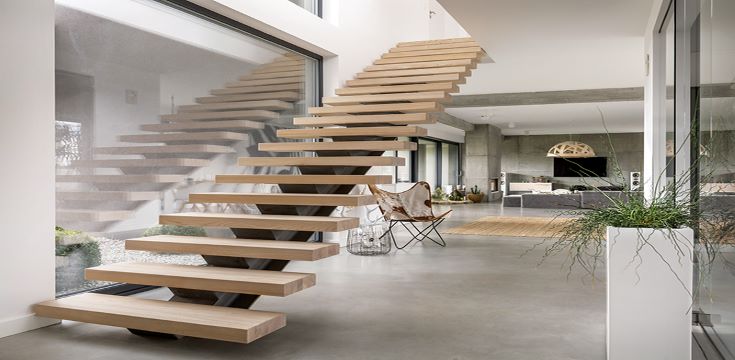
A staircase can be the central element of a house; an artistic, architectural element integrated into the reception of a home. A beautiful staircase can emphasize the beauty of a home, posing as an artistic centerpiece, especially in homes with high ceilings.
The ideas for a staircase are endless, but the staircase is a strong and present element in interior design. The style of the house plays a key role in choosing the design of a staircase. For example, for a contemporary home, a designer can consider a self-supporting staircase or around the staircase for a more interesting and unique approach.
A big trend today is to create staircases in solid-wood cladding with guardrails that allow the steps to be seen from any point in the room. Some examples of guardrails being used today are glass or stainless-steel cables.
Balustrades and handrails are both great options and should complement the style of the home. While the architectural structure of the balustrade is classic and uniform, gravitate more toward the use of handrails with unique designs and shapes. Handrails also provide a range of diversity. Unlike the balustrade, handrails can be suspended, fixed on the steps, or even installed as floating handrails.
Take a Cue From Your Home’s Character
Explore what suits the structure of your home, the scale, and the architectural elements, and make sure the stairwell complements them versus overwhelms them. A great way to draw the eye and create contrast is to paint the stairs white and the railing and banister black. A classic hand-forged iron banister is also a great statement that’s timeless and can contemporize a traditional space.”
Size to Scale
A staircase typically links the more public spaces on one floor of a house to the more private spaces on another floor and provides a meaningful transition between them. The actual staircase should reflect the architecture more than the decor. A carpet stair runner is a great way to connect it to the decor.
It should be proportionate in scale to wherever it’s located in the house, along with the overall scale of the house. It would be a bit of a letdown, for instance, to open the front door of a grand house and find a diminutive staircase.
Always choose timeless and durable materials. Ornate metal balustrades can be gorgeous, timeless, and classic statement-makers, but also tend to be quite a bit more expensive than wood. Beautiful wood balustrades, in mahogany or walnut, can be a great way to go. Painted balustrades are a relatively cost-effective way to add interest to a staircase. Wood treads with a block of wood or painted riser—generally with a carpet runner for aesthetic interest and coziness underfoot. Not to mention to help muffle the sound.
For a handrail, one that’s fairly wide and generally prefer wood to metal, which is softer and somehow more comforting to the touch.
For more visit: https://www.mansionglobal.com/